
How to Import Furniture from India: A Step-by-Step Guide for Buyers
A practical, step-by-step guide to importing solid-wood furniture from India, covering supplier vetting, RFQs, samples, MOQs, containers, Incoterms, quality control, export packing, shipping documents, destination compliance and payment terms.
Importing furniture from India can be a rewarding way to build a range with real character: solid wood, handwork and finishes that are hard to find from mass-production sources. It can also be frustrating if the process is rushed or expectations are never written down.
This guide walks through the full journey, from vetting a manufacturer to clearing goods at your destination port, for importers, wholesalers, retailers and sourcing companies. Rules change, so treat it as a framework and confirm specifics with your customs broker and freight forwarder.
Why India, and why Jodhpur, for solid-wood furniture
India has a long tradition of woodworking, and many of its furniture clusters grew out of generations of carpenters, carvers and metalworkers. Jodhpur, in Rajasthan, is one of the best-known centres for export furniture. Over the past few decades it has developed a dense network of workshops, timber yards, finishing units, hardware suppliers, packers and freight agents, which makes it practical to source a wide variety of styles from one city.
A few things tend to draw buyers to the region:
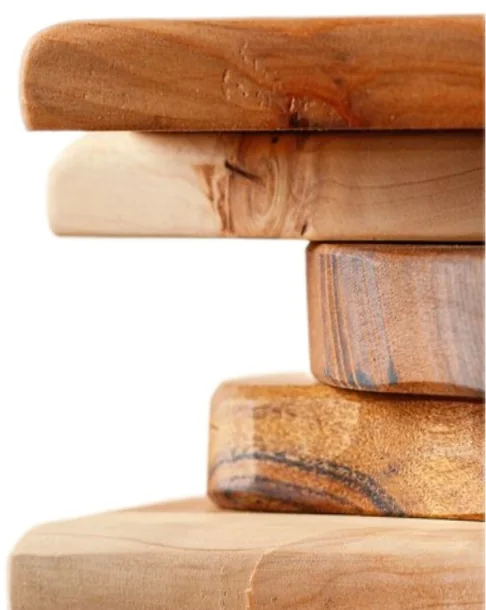
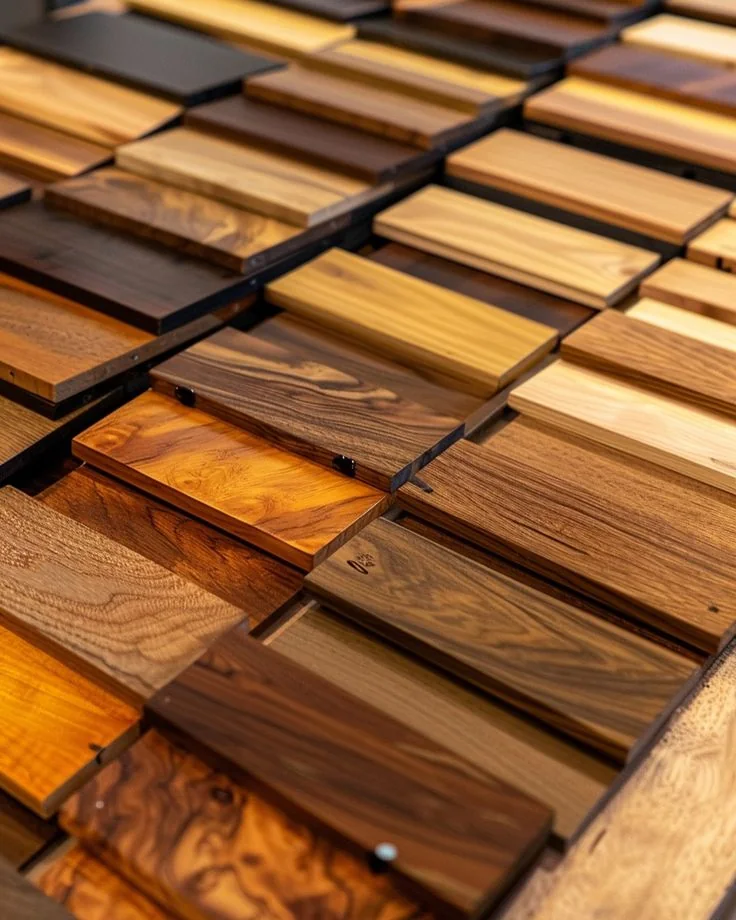
- Solid hardwoods. Mango, acacia, sheesham (Indian rosewood) and teak are widely used. Each has its own grain, colour and working properties, and many buyers mix woods across a collection.
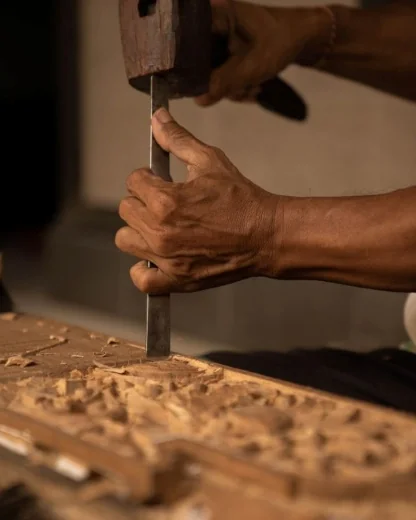
- Handwork. Hand-finishing, carving, distressing, hand-applied colour and metal or bone inlay are part of the local skill base. This suits buyers who want pieces that do not look machine-made.
- Flexibility. Many workshops are used to producing to a buyer's design rather than only selling a fixed catalogue, and to working with relatively modest order quantities.
Solid wood moves with changes in humidity, which is why kiln drying, construction and packing matter so much for export.
Step 1: Define what you actually want to buy
Suppliers can only quote accurately against a clear brief, and a clear brief helps you compare quotes fairly.
Decide on:
- Product categories. Dining tables, chairs, sideboards, beds, storage, occasional tables, or a mix.
- Target retail price and margin. Work backwards from your selling price to a realistic landed cost, then to an ex-factory or FOB target.
- Style and materials. Preferred woods, finishes, metal or upholstery components, and any materials you want to avoid.
- Quantities and frequency. A one-off trial, a seasonal order, or a continuous programme.
- Your market's rules. Labelling, product-safety requirements and timber-legality obligations in your country (covered later in this guide).
If you are unsure how much will fit into a container, a rough plan helps. Our container load calculator can give you an early sense of how many pieces of a given size may fit before you speak to suppliers.
Step 2: Find and vet a manufacturer
Know whether you are dealing with a manufacturer, a trading company or an agent. A manufacturer controls production directly; a trader or agent may offer a broader range, but adds a layer between you and the factory floor.
How to vet a supplier
Build a shortlist from trade fairs, referrals from other importers and forwarders, B2B directories and manufacturers' own websites. Then test each one in a structured way.
- Visit, or hold a live video call. A factory visit is ideal. If that is not practical, ask for a live video walk-through of the timber yard, kilns, machine shop, assembly, finishing and packing areas. A live call is harder to stage than pre-recorded footage.
- Ask about raw materials. Which woods do they use, where is the timber sourced, and how is it dried? Kiln-dried timber with a controlled moisture content is important for solid-wood furniture that will travel to a different climate.
- Check registration documents. Indian exporters normally hold an Importer Exporter Code (IEC) issued by the Directorate General of Foreign Trade, and a Goods and Services Tax (GST) registration. Ask for the numbers and check that the legal entity name matches the one on quotations, proforma invoices and bank details.
- Ask for references. Request contact details for existing buyers, ideally in your region. Not every supplier will share client names, but a willingness to put you in touch with someone is a good sign.
- Review past export experience. Ask which markets they ship to and whether they are familiar with the documentation and compliance requirements of your country.
- Order samples. Nothing replaces holding the product in your hands (see Step 4).
- Assess communication. Clear, prompt answers at the quotation stage, including an honest "not possible", are usually a fair predictor of communication during production.
For context, Pearl Art Exports has been manufacturing in Jodhpur since 2004 and lists its GST and IEC registration. Whoever you shortlist, ask for the same kind of basic information and verify it independently.
Step 3: Write a clear RFQ or tech pack
A request for quotation (RFQ) tells the supplier what you want priced. For custom or modified products, a tech pack goes further and describes the product in enough detail that it can be made consistently.
What to include
- Drawings or references. Dimensioned drawings are best. Sketches, photographs or an existing sample can also work, provided you mark up the details that matter.
- Dimensions and tolerances. Overall sizes, plus acceptable tolerances (for example, ± a few millimetres on key dimensions).
- Wood species. And whether mixing species or using veneers in any part is acceptable.
- Moisture content. State your expected moisture range for the timber.
- Construction. Joinery type, how tops are fixed to allow for wood movement, knock-down versus fully assembled, and hardware specifications.
- Finish. Colour reference, sheen level, and the type of finish (for example, lacquer, oil or wax). Send a physical colour sample if you can.
- Components. Metal parts, glass, upholstery, castors or drawer runners, with specifications.
- Packaging requirements. Carton strength, inner protection, labelling, barcodes, assembly instructions and any language requirements.
- Compliance requirements. Product-safety standards, labelling, and timber-legality documentation you will need.
- Quantities. Per item and in total, plus whether you expect a mixed or single-product container.
- Incoterm and destination port. So the quote is comparable.
Vague briefs lead to quotes that look cheap on paper but do not match what you had in mind.
If you want to develop your own designs, manufacturers that offer OEM or ODM services can work from sketches, photos or full tech packs. You can read how that process works on our custom manufacturing page.
Step 4: Samples and approvals
Samples are where your specification meets reality. Treat this stage seriously; it is much cheaper to correct issues on one sample than on a full container.
Types of sample
- Pre-production or development samples. Made to check design, proportions, construction and finish.
- Finish and colour panels. Small panels of wood showing the agreed finish, useful for matching across batches.
- Golden (approved) sample. The final approved sample, which becomes the reference for production and inspection. Ideally, both you and the supplier keep one, or at least a matching set of signed photographs and specifications.
Approving a sample
- Check every dimension against your drawing.
- Inspect joinery, stability, drawers, doors and hardware.
- Assess the finish in natural light against your colour reference.
- Assemble any knock-down items using the instructions provided.
- Record changes clearly, with photographs, and ask for a revised sample if they are significant.
Grain, knots and tonal variation are natural in solid wood. Agree in advance what variation is acceptable so inspections are fair to both sides.
Step 5: Understand MOQs and choose LCL or FCL
Minimum order quantities
A minimum order quantity (MOQ) is the smallest order a supplier will accept, either per design, per finish or per order overall. Solid-wood furniture factories often set MOQs to make timber buying, machine set-up and finishing runs economical. Some are flexible, particularly for sample orders or repeat buyers, so it is worth asking rather than assuming.
LCL versus FCL
- LCL (less than container load). Your goods share a container with other shippers' cargo. It suits trial orders and smaller buyers, but cost per cubic metre is usually higher, there is more handling at consolidation and deconsolidation points, and transit can take longer.
- FCL (full container load). You book a whole container. It usually gives a lower cost per cubic metre, less handling and lower risk of damage, but you need enough volume to fill it sensibly.
Container sizes
The figures below are approximate usable volumes for furniture loading. Real capacity depends on carton sizes, product mix and how well the container is planned.
| Container type | Approximate usable volume | Typically suits |
|---|---|---|
| 20′ GP (general purpose) | ~28 CBM | Smaller orders, heavier items, first full container |
| 40′ GP (general purpose) | ~58 CBM | Mixed ranges and larger orders |
| 40′ HC (high cube) | ~68 CBM | Bulky, lighter furniture such as sofas, cabinets and stacked chairs |
Furniture is usually volume-limited rather than weight-limited, so high-cube containers are popular. A mixed container lets you test several designs and finishes without committing to large quantities of each.
Step 6: Pricing basics and Incoterms
What goes into the price
Quoted prices for solid-wood furniture usually reflect:
- Timber species, grade, drying and wastage
- Labour, particularly handwork and hand-finishing
- Hardware, metal, glass or upholstery components
- Finish complexity, packaging specification and order quantity
- The Incoterm (which costs the supplier covers)
When you compare quotes, make sure you are comparing like for like: the same wood, finish, packaging and Incoterm.
Incoterms explained
Incoterms are standard trade terms published by the International Chamber of Commerce. They define who pays for which part of the journey and where risk passes from seller to buyer. They do not cover everything (for example, they do not define ownership transfer or payment terms), so your contract should cover those separately.
The terms most often used in furniture trade include:
| Incoterm | What the seller generally covers | What the buyer generally covers |
|---|---|---|
| EXW (Ex Works) | Making the goods available at the seller's premises | Loading, export clearance, all transport, insurance, import clearance and duties |
| FOB (Free on Board) | Delivering goods on board the vessel at the named port of shipment, including export clearance | Main sea freight, insurance, destination charges, import clearance and duties |
| CIF (Cost, Insurance and Freight) | Goods, export clearance, sea freight and minimum insurance to the named destination port | Destination port charges, import clearance, duties and onward delivery; risk passes once goods are on board at origin |
| DDP (Delivered Duty Paid) | Everything up to delivery at the named destination, including import clearance and duties | Unloading at the named place, as agreed |
A few practical points:
- FOB is common for buyers who have their own freight forwarder and want control over shipping.
- CIF can be convenient, but note that risk passes at loading in India, not on arrival. Check the insurance cover is adequate for your needs.
- EXW puts a lot of responsibility on the buyer, including Indian export formalities, which can be awkward to manage from abroad.
- DDP is simple for the buyer but requires the seller to handle import formalities in your country, which is not always practical or possible.
Always state the Incoterm, the named place or port and the Incoterms version (for example, "FOB Mundra, Incoterms 2020") in writing on the quotation, proforma invoice and purchase order.
Step 7: Production timeline stages
Lead times vary widely depending on product complexity, order size, season and timber availability, so ask each supplier for a timeline specific to your order. What is useful to understand is the sequence of stages, so you can follow progress and plan inspections.
- Order confirmation. Purchase order, proforma invoice and any deposit.
- Material planning. Timber purchase or allocation, hardware and component ordering.
- Kiln drying and seasoning. Timber is dried to the target moisture content before machining.
- Machining and cutting. Components are cut, planed and shaped.
- Joinery and assembly. Components are joined and assembled, or prepared as knock-down parts.
- Sanding and surface preparation.
- Finishing. Staining, colouring, distressing, sealing and top coats, with drying time between stages.
- Final inspection and touch-ups.
- Export packing.
- Container loading and dispatch.
Ask for progress updates with photographs at key stages. Delays most often arise at the start (late approvals or deposits, material shortages) and at finishing, where drying times play a part.
Step 8: Quality control
Quality control works best as a series of checks rather than a single inspection at the end.
The three common inspection stages
- Pre-production inspection. Checks raw materials, timber moisture content, components and the approved sample before production starts. This is the best moment to catch a wrong wood species, an off-colour finish panel or an incorrect hardware specification.
- Inline (during production) inspection. Typically carried out when a meaningful portion of the order is in progress. It checks construction, dimensions and finishing, and allows corrections while there is still time.
- Pre-shipment inspection. Carried out when goods are finished and mostly packed. A random sample is checked against the approved sample and specification, including packing and labelling.
AQL sampling
Many buyers and third-party inspection companies use AQL (Acceptance Quality Limit) sampling. In simple terms, a statistically based number of units is selected from the lot and inspected, and the lot is accepted or rejected based on how many defects are found, usually split into critical, major and minor categories. Agree the AQL levels and defect definitions in advance, ideally in writing.
Inspections can be done by the manufacturer's own QC team, a third-party inspection company you appoint, or you or your agent in person. At Pearl Art Exports, quality control runs in three stages, and pre-shipment inspection reports with photographs are shared with buyers. Whatever arrangement you choose, ask to see sample inspection reports before you place an order so you know what level of detail to expect. You can read more about how production and checks are organised on our manufacturing & quality page.
Step 9: Packaging for export
Furniture travels a long way, through changes in temperature and humidity, and is handled several times. Good packaging protects your margin.
Typical export packing
- Strong corrugated cartons, often five-ply or more for heavier items.
- Corner and edge protectors made from foam, cardboard or moulded pulp.
- Surface protection such as foam sheets, bubble wrap or soft wrapping to prevent scratches and rubbing.
- Moisture control. Timber that has been properly kiln-dried is the foundation, but desiccant bags in cartons or containers, and sometimes moisture-barrier wrapping, can help reduce the risk of mould or condensation during transit.
- Clear carton markings, including item code, weights, carton number and handling symbols, plus securely attached hardware packs for knock-down items.
Wood packaging and ISPM 15
ISPM 15 is an international standard for wood packaging material used in international trade, such as pallets, crates and dunnage. Wood packaging covered by the standard must be treated (usually by heat treatment or approved fumigation) and carry the recognised ISPM 15 mark. Note that ISPM 15 applies to the packaging, not to the furniture itself.
Depending on your destination and the products, the authorities or your customer may also ask for fumigation of the goods or a phytosanitary certificate. Requirements differ from country to country and can change, so confirm with your customs broker before shipment what is needed.
Pearl Art Exports carries out export packing in-house and arranges fumigation as required for the destination.
Step 10: Shipping documents
Inconsistent or inaccurate documents are a frequent cause of customs delays and extra charges.
Core documents
- Commercial invoice. Seller and buyer details, description of goods, HS codes, quantities, unit prices, total value, currency, Incoterm and country of origin.
- Packing list. Carton-by-carton breakdown of contents, dimensions, gross and net weights and total volume.
- Bill of lading (B/L). Issued by the carrier or forwarder, acting as a receipt for the goods, evidence of the contract of carriage and, for an original B/L, a document of title.
- Certificate of origin. Confirms where the goods were made. In some cases a specific form is needed to claim reduced duty under a trade agreement or preference scheme.
- Fumigation certificate. When fumigation has been carried out and is required.
- Phytosanitary certificate. When required by the destination country.
Ask your supplier to send draft documents for checking before they are finalised, particularly the commercial invoice and packing list. Make sure the product descriptions, HS codes and values are consistent across all documents. If you want a clearer picture of how an exporter handles documentation for mixed and full containers, our trade & export page sets out the process.
Step 11: Destination-market compliance
In most markets compliance is ultimately the importer's responsibility, so understand the requirements before you approve samples. These pointers are general, not legal advice; check current rules with your customs broker or a compliance specialist.
European Union: EUDR
The EU Deforestation Regulation (EUDR) requires operators placing certain products on the EU market, including wood and many wood products such as furniture, to carry out due diligence showing that the products are deforestation-free and legally produced. This typically involves collecting information such as the geolocation of the land where the timber was harvested, and submitting due-diligence statements.
The application dates of the EUDR have been changed since the regulation was adopted, and further changes are possible. Check the current timetable and requirements for your company size, and discuss with your suppliers early what information they can provide about timber origin.
United States: Lacey Act
The US Lacey Act makes it unlawful to trade in plant products, including timber, that were harvested or traded illegally. It also requires import declarations for many plant products, including a range of wood furniture categories, listing details such as the species and country of harvest. Your customs broker can advise which of your products are covered and what information is needed.
United Kingdom and other markets
Many other countries have their own timber-legality rules, which may require importers to carry out due diligence on the source of wood. Requirements and their enforcement vary, so check what applies in your market.
Product safety and labelling
Beyond timber legality, consider:
- General product-safety laws and furniture-specific standards, such as stability or tip-over requirements for storage furniture in some markets.
- Finish and coating rules, such as limits on lead in paints or formaldehyde emissions.
- Flammability rules for upholstered furniture in certain markets.
- Labelling requirements, including origin marking, importer details and warnings.
Share your compliance requirements with your supplier in the RFQ stage so they can be built into materials, construction, finishing and packaging from the start.
Step 12: Payment terms
Payment terms are agreed between buyer and seller, and different arrangements suit different relationships. Common options in furniture trade include:
- Deposit plus balance. A deposit (often a percentage of the order value) on confirmation, with the balance paid before shipment, on receipt of a copy of the bill of lading, or against documents. Many buyers pay the balance after a satisfactory pre-shipment inspection.
- Documentary collection. The seller's bank sends the shipping documents to the buyer's bank, which releases them to the buyer on payment (documents against payment) or acceptance of a bill of exchange.
- Letter of credit (LC). The buyer's bank undertakes to pay the seller when compliant documents are presented. LCs provide security for both parties but involve bank charges and strict document requirements. Even small discrepancies can delay payment, so agree the LC terms carefully with the supplier before it is issued.
- Open account. Payment after delivery on credit terms, usually for established relationships.
Whatever you choose, put the terms in writing on the proforma invoice and purchase order. Confirm bank details by a trusted channel, such as a phone call to a known contact, before sending payment, and be cautious of any unexpected request to change bank accounts.
Common mistakes to avoid
- Choosing on price alone. The cheapest quote often reflects lower-grade timber, thinner components, inferior finishing or weaker packaging.
- Skipping samples. Approving from photographs saves a few weeks but risks a container of products that do not match expectations.
- Vague specifications. If it is not written down, it is open to interpretation.
- Ignoring moisture content. Timber that is not properly dried can crack, warp or develop mould in a different climate.
- Not planning compliance early. Timber-legality information, testing and labelling are much easier to build in at the start than to retrofit.
- Unclear Incoterms. Misunderstanding who pays for what, or where risk passes, leads to unexpected costs.
- No inspection before shipment. Once goods have left, resolving problems becomes far harder and more expensive.
- Underestimating landed cost. Freight, insurance, duties, taxes, port and brokerage charges all add up.
- Late changes. Changing designs or finishes after production has started causes delays and cost.
Import checklist
| Stage | Key actions | Done |
|---|---|---|
| Planning | Define products, target landed cost, quantities and market rules | ☐ |
| Supplier vetting | Visit or video call, check IEC and GST, references, export experience | ☐ |
| RFQ / tech pack | Drawings, dimensions, wood, moisture, construction, finish, packing, compliance, Incoterm | ☐ |
| Samples | Order samples, review, document changes, approve golden sample | ☐ |
| Order planning | Confirm MOQ, LCL or FCL, container type and load plan | ☐ |
| Contract | Price, Incoterm with named port, payment terms, timeline, QC and AQL levels in writing | ☐ |
| Production | Track stages with photographs and updates | ☐ |
| Quality control | Pre-production, inline and pre-shipment inspections | ☐ |
| Packaging | Cartons, protection, moisture control, ISPM 15 for wood packaging, markings | ☐ |
| Documents | Check draft invoice and packing list; B/L, certificate of origin, fumigation or phytosanitary certificates where needed | ☐ |
| Compliance | EUDR, Lacey Act or local timber-legality rules, product safety and labelling, confirmed with broker | ☐ |
| Payment and arrival | Pay balance as agreed, arrange customs clearance, inspect goods on arrival | ☐ |
FAQ
Can I start with a small order?
Many manufacturers accept sample orders or small mixed shipments, especially for new buyers. MOQs vary by supplier and product, so ask directly. Sharing a container through LCL shipping is one way to start without filling a full container.
How do I know the timber is legal?
Ask your supplier about the source of each wood species and what documentation they can provide. Requirements differ by market, so check with your customs broker or a compliance adviser what evidence you need for the EUDR, the Lacey Act or your local rules.
What moisture content should solid-wood furniture have?
It depends on the timber and the destination climate. A kiln-dried range of around 8–10% is often used for export furniture, but agree a target with your supplier based on where the goods will be used.
What happens if goods arrive damaged?
Document the damage immediately with photographs, note it on the delivery receipt, and inform your supplier, forwarder and insurer promptly. How costs are handled depends on the Incoterm, your insurance cover and what was agreed in your contract.
For more answers, see our FAQ page.
Closing thoughts
Importing furniture from India works best when it is treated as a partnership built on clear specifications, honest communication and agreed checks at every stage. Take time to vet your supplier, invest in samples, put the important terms in writing and involve your customs broker early. Do that, and the craft, materials and flexibility that draw buyers to Jodhpur can become a dependable part of your range. If you would like to explore designs before you begin, you can request a catalogue.