
Why Solid Wood Moves — Kiln-Drying, Moisture Content and Finishes Explained
A practical guide for furniture buyers to why solid wood moves, what kiln-drying and moisture content really mean, how good joinery allows for movement, how finishes differ, and how to ship, acclimatise and care for solid-wood pieces.
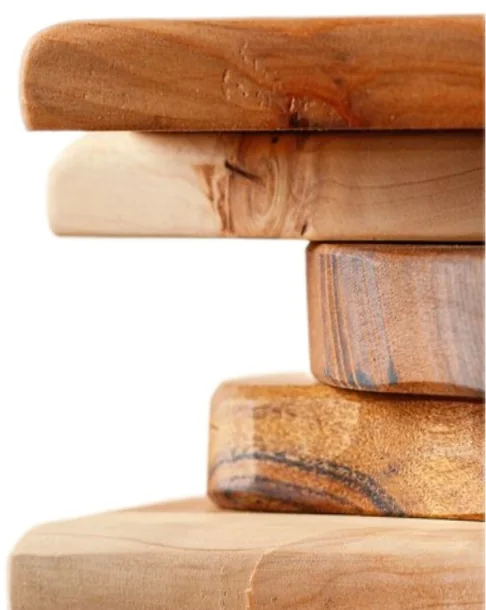
Every solid-wood table, cabinet and bed frame is still, in one important sense, alive. Long after the tree is felled and the piece is finished, the wood keeps exchanging moisture with the air around it. As it gains moisture it swells; as it loses moisture it shrinks. This is not a defect. It is simply what wood does.
For importers, retailers, interior designers and hotel buyers, understanding this behaviour is the difference between a collection that performs for years and one that returns as cracked tops and gappy drawers. This guide explains why wood moves, how manufacturers control it through drying and construction, how finishes affect it, and what you and your customers can do to keep pieces stable once they arrive.
What "wood movement" actually means
Wood is made of long, hollow cells. Water lives in two places: free water inside the cell cavities, and bound water within the cell walls.
When a freshly sawn log dries, the free water leaves first. This causes almost no change in size. Once the free water has gone, the wood reaches what is called the fibre saturation point. Below that point, the cell walls themselves begin to give up water, and this is when the wood starts to shrink.
The reverse is also true. A dry board placed in humid air will absorb moisture back into its cell walls and swell. This cycle continues for the life of the piece.
Seasonal movement
In most parts of the world, indoor humidity changes with the seasons. Winter heating dries the air; summer humidity, open windows and air conditioning cycles change it again. A solid-wood tabletop will be slightly narrower in a dry heated winter and slightly wider in a humid summer.
On a narrow board, this change may be barely visible. Across a wide dining-table top made of several glued boards, it adds up and can be clearly measurable. Good furniture is designed so that this movement happens freely, without stress building up in the joints or the finish.
Tangential, radial and longitudinal shrinkage
Wood does not shrink equally in every direction. There are three directions to think about:
- Longitudinal (along the grain): movement is so small that, for furniture purposes, it can usually be ignored. A table's length barely changes.
- Radial (from the centre of the tree outwards, across the growth rings): moderate movement.
- Tangential (along the growth rings, parallel to the bark): the largest movement, typically around twice the radial figure for many species.
This difference explains a lot. A flat-sawn board (where the growth rings run roughly across the board's face) moves mainly tangentially across its width, so it moves more and has a greater tendency to cup. A quarter-sawn board (rings running roughly perpendicular to the face) moves mainly radially, so it is more stable, although it is also more wasteful to cut and therefore less common.
Different species also differ in how much they move. Teak is widely valued for its stability and natural oils. Sheesham (Indian rosewood), mango and acacia are all well-proven furniture timbers, but each has its own character, and good design takes that into account.
Equilibrium moisture content: why destination matters
Wood always tries to reach balance with the surrounding air. The moisture level at which it stops gaining or losing water is called its equilibrium moisture content (EMC). EMC depends mainly on relative humidity, and to a lesser extent on temperature.
In practice, this means the "right" moisture content for a piece of furniture depends on where it will live:
- Dry, centrally heated interiors (common in colder climates during winter) push EMC down. Wood here tends to shrink.
- Humid coastal and tropical climates push EMC up. Wood here tends to swell.
- Air-conditioned buildings in hot climates can be surprisingly dry indoors, even when the outdoor air is humid.
- Moderate, temperate interiors usually sit somewhere in the middle, with seasonal swings.
Furniture need not match its destination EMC perfectly on day one, but the closer the starting point, the less the wood moves after delivery.
Why export furniture is kiln-dried
Furniture that will travel thousands of kilometres, through changing climates and into unknown interiors, needs to start from a known, controlled moisture level. That is the purpose of kiln-drying.
Air-drying vs kiln-drying
Air-drying means stacking sawn timber with spacers ("stickers") between the boards, under cover, and letting natural airflow remove moisture over months or longer. It is gentle and low-cost, and many craftspeople value it. Its limitation is that air-dried wood can only reach the EMC of the outdoor air where it is stored. In many climates, that is still too wet for furniture destined for heated or air-conditioned interiors.
Kiln-drying places timber in a chamber where temperature, humidity and airflow are controlled. The wood is brought down to a target moisture content in a planned schedule. Done well, kiln-drying:
- reaches lower moisture levels than air-drying can achieve in most climates;
- produces more consistent moisture throughout a batch;
- can relieve internal drying stresses through a final conditioning stage;
- helps kill insects and larvae that may be present in the timber.
Done badly, with drying that is too fast or too hot, it can cause internal checks, surface cracks and "case hardening", where the outside of the board sets before the core. The schedule and the operator's experience matter as much as the kiln.
Many workshops combine both approaches: timber is seasoned first, then finished off in the kiln.
What a target of 8–10% means
At Pearl Art Exports, timber is seasoned in-house and kiln-dried to 8–10% moisture content before it goes into production. This is a widely used target range for export furniture because it sits comfortably for a broad range of indoor environments.
Moisture content is expressed as the weight of water in the wood as a percentage of the weight of the wood when completely dry. So "8–10%" means the water present is 8–10% of the oven-dry weight of the timber.
The trade-off with destination climate
No single moisture figure is perfect for every market. A range such as 8–10% is a sensible middle ground:
- In very dry heated interiors, the wood may still lose a little moisture after arrival and shrink slightly. Good construction allows for this.
- In humid coastal regions, the wood will gain some moisture and swell slightly. Again, construction should allow for this, and drawers and doors should not be fitted so tightly that they bind.
If your market sits at one extreme, discuss it with your manufacturer at the sampling stage. Small adjustments to clearances, panel gaps and finish choice can make a real difference.
How to measure moisture content
Buyers do not need to take a manufacturer's word for it. Moisture can be measured quickly with a handheld meter.
Pin meters
A pin meter has two small metal prongs that are pushed into the wood. It measures electrical resistance between the pins, which changes with moisture content.
- Strengths: can read at a known depth; inexpensive; widely understood.
- Limitations: leaves small holes (test on hidden surfaces only); readings usually need correcting for species and temperature.
Pinless meters
A pinless meter is pressed flat against the surface and uses an electromagnetic field to estimate moisture to a set depth.
- Strengths: no marks on the furniture; quick to scan large surfaces.
- Limitations: needs the correct species or density setting; readings can be affected by surface finish, metal fittings or uneven surfaces.
Tips for reliable readings
- Take several readings from different parts of a piece, not just one.
- Test unfinished or hidden areas where possible, such as the underside of a top or inside a carcass.
- Set the meter for the correct species, or use the manufacturer's correction tables.
- Treat readings as indicative. Meters are useful tools, not laboratory instruments.
What buyers can ask for
When sourcing solid-wood furniture, it is reasonable to ask:
- What moisture content is the timber dried to before production?
- Is the timber seasoned before kiln-drying?
- Are moisture readings checked during production and before packing?
- Can moisture readings be included in pre-shipment inspection reports or photographs?
- How does the design allow for movement in wide panels and tops?
A manufacturer who understands wood will answer these questions easily. You can read more about how we approach this on our manufacturing & quality page.
Construction details that allow wood to move
Drying controls the starting point. Construction decides what happens next. The golden rule is simple: never trap solid wood so that it cannot move across its width. Here are the common techniques, explained plainly.
Floating panels
In a frame-and-panel door or cabinet side, the solid panel sits in grooves cut into the surrounding frame. It is not glued in place. As the panel swells and shrinks, it slides within the grooves, while the frame (whose parts run lengthways, where movement is minimal) stays stable. A small gap is left at the bottom of the groove so the panel has room to expand.
Slotted fixings
Where a solid top is screwed to a base, the screw holes are elongated into slots that run across the grain. The screw holds the top down but can slide sideways as the top moves. A round hole would pin the top and, over time, could cause it to crack.
Tabletop buttons and figure-eight fasteners
Tabletop buttons are small wooden blocks screwed to the underside of the top, with a tongue that fits into a groove in the table's apron (the frame below the top). They hold the top firmly but let it slide in the groove. Figure-eight fasteners and similar metal clips do the same job. Both are standard, proven ways to attach a solid top.
Breadboard ends
A breadboard end is a strip of wood fixed across the end of a tabletop, with its grain running at right angles to the top. It helps keep the top flat and protects the end grain. Because the top moves across its width but the breadboard does not, the joint is usually glued only in the centre, with the outer pegs set in elongated holes so the top can move freely beneath.
Mortise-and-tenon joints
A mortise-and-tenon joint is one of the oldest and strongest in furniture making: a tongue (the tenon) on one part fits snugly into a matching hole (the mortise) in another. It provides a large gluing surface and mechanical strength, which is why it is used for legs, rails and frames. Good proportions and well-fitted shoulders help it stay tight through seasonal changes.
Clearances in drawers and doors
Drawers and doors need a small amount of space around them to cope with swelling. Fitted too tightly in a dry workshop, they may stick in a humid climate. Fitted too loosely, they may rattle in a dry one. Experienced makers judge this based on species, size and destination.
Common defects and what causes them
Most problems with solid-wood furniture come back to one of three causes: wood that was not properly dried, construction that does not allow movement, or an environment that changes too fast or too far.
Cracks and checks
Checks are small splits along the grain, often at the ends of boards or on the surface. Cracks are larger and go deeper.
- Causes: rapid drying; very low humidity, often near radiators, underfloor heating or air-conditioning vents; tops fixed rigidly so they cannot shrink; unsealed end grain, which loses moisture much faster than other surfaces.
- Prevention: properly dried timber; slotted fixings and buttons; sealed end grain; stable room conditions.
Warping
Warping is a general term for a board that no longer sits flat or straight. It includes bowing (curving along its length), twisting (corners lifting) and crooking (bending edgeways).
- Causes: internal stresses in the wood; uneven drying; one face sealed and the other not.
- Prevention: good timber selection; correct drying and conditioning; finishing all faces evenly.
Cupping
A cupped board curves across its width, like a shallow trough.
- Causes: one face gaining or losing moisture faster than the other, such as a top in direct sunlight, a piece against a damp wall, or an unfinished underside.
- Prevention: finishing the underside as well as the top; keeping furniture out of direct sun and away from heat sources; using narrower boards in wide tops.
Joint gaps
Small gaps may appear at joints, between glued boards or around panels.
- Causes: seasonal shrinkage in dry conditions; poorly fitted joints; timber that was too wet when assembled.
- Prevention: correctly dried timber; accurate joinery; allowing pieces to acclimatise before judging them. Many small seasonal gaps close again as humidity rises.
Finishes explained
A finish protects wood from stains, spills and wear, and gives it its final look. It also slows, but does not stop, moisture exchange with the air. No finish makes wood completely stable; it simply makes changes slower and more even.
Oils
Penetrating oils soak into the wood and harden within the fibres. They give a natural, close-to-the-wood look and feel, and are easy to refresh or repair locally. Their trade-off is lower resistance to water, heat and stains than film-forming finishes, so they need more regular maintenance.
Waxes
Wax gives a soft, low sheen and a pleasant touch. It is often used over oil or as a top coat on distressed and rustic pieces. Wax on its own offers limited protection against water and heat, and needs periodic re-application.
Lacquers: NC and PU
Lacquers form a protective film on the surface.
- NC (nitrocellulose) lacquer dries quickly, builds a clear finish and is relatively easy to repair. It is less resistant to heat, solvents and heavy wear than tougher alternatives.
- PU (polyurethane) lacquer forms a harder, more durable film with good resistance to water, heat, scratches and household chemicals. It is a common choice for high-use furniture, although repairs are harder to make invisible.
Water-based vs solvent-based
Both oils and lacquers come in solvent-based and water-based forms.
- Solvent-based finishes have a long track record, tend to warm and deepen the wood's colour, and can be very durable.
- Water-based finishes generally have lower odour and lower solvent emissions, stay clearer with less yellowing, and have improved greatly in durability. Some destination markets prefer or require lower-emission finishes, so it is worth stating this at the specification stage.
Stains and colour
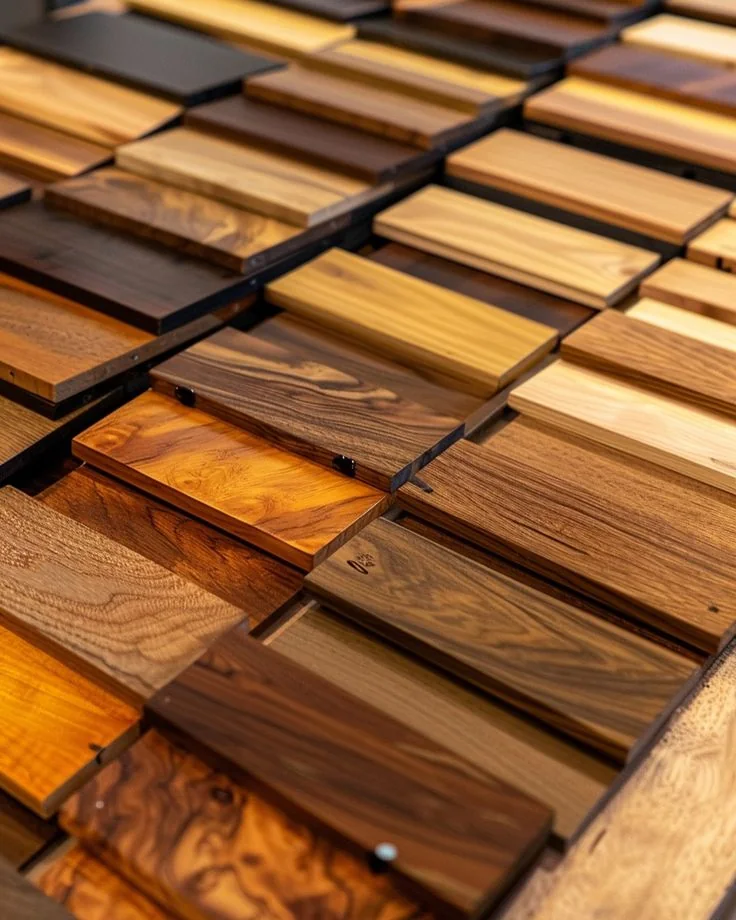
Stains and tinted finishes change the colour of the wood while (ideally) letting the grain show through. Pearl Art Exports offers natural, walnut, distressed, whitewash and black finishes, plus custom colour matching. In general terms:
- Natural: a clear finish that shows the wood's own colour and grain. Expect natural variation between boards and gradual mellowing over time.
- Walnut: a warm, mid-to-dark brown tone that brings a classic, rich look to lighter woods.
- Distressed: deliberate wear, rubbed edges and layered colour for an aged, lived-in character. Small knocks in use tend to blend in.
- Whitewash: a pale, semi-transparent finish that lets the grain read through a soft white tone. Popular in coastal and Scandinavian-inspired schemes.
- Black: a dramatic, contemporary finish. Depending on the method, grain can remain visible or be largely hidden.
Sheen levels
Sheen describes how much light the surface reflects. Typical levels run from matt, through satin or semi-matt, to semi-gloss and gloss.
- Matt and satin finishes hide fingerprints and fine scratches better, and are currently the most popular for solid wood.
- Higher gloss looks more formal but shows marks and wear more readily.
Durability for hospitality use
Hotels, restaurants and serviced apartments put furniture through far more than a family home: cleaning chemicals, hot plates, wet glasses, luggage and constant handling. For hospitality projects, consider:
- a tougher film-forming finish such as PU on tabletops, bar tops and desk surfaces;
- matt or satin sheen to reduce visible wear;
- darker or distressed finishes where daily knocks are inevitable;
- a clear cleaning and maintenance protocol for housekeeping staff;
- sampling the finish and testing it with the actual cleaning products the property will use.
Colour matching from a sample
If you need to match an existing range, a fabric palette or a design scheme, a physical reference works far better than a photo or screen colour. Screens and printed images vary too much to be reliable.
Keep in mind:
- The same stain looks different on different species, and even on different boards of the same species.
- Final colour depends on the timber, the stain, the top coat and the sheen together.
- Lighting changes perception, so approve samples in daylight and under the lighting the furniture will actually be seen in.
- Approving a finished sample before production is the most reliable way to avoid surprises.
At our Jodhpur workshop, samples are made for approval before production, and colour matching is part of our custom manufacturing service. If you are planning a range, you can ask for samples.
Shipping and acclimatisation
Even perfectly dried and built furniture goes through a lot in transit. A container may cross several climate zones, with temperatures inside swinging between day and night.
Advice for importers and retailers
- Let cartons acclimatise. When goods arrive, leave cartons closed in the warehouse or showroom for a period so the furniture adjusts gradually to the new conditions. Larger pieces benefit from a longer wait.
- Avoid unboxing next to heaters. Never open or store solid-wood furniture beside radiators, heaters, warm-air blowers or in direct sun. A sudden change is what causes cracks, not the change itself.
- Watch for condensation. If goods arrive from a cold container into a warm building, or vice versa, wait for any condensation to dry before unpacking.
- Store sensibly. Keep stock off damp floors, away from external doors and loading bays, and out of very hot or very cold areas.
- Inspect calmly. Small joint movement or a drawer that is a little stiff on arrival often settles once the piece has acclimatised. Assess after a settling period rather than immediately.
Well-designed export packing helps a great deal. Pearl Art Exports carries out its export packing in-house, alongside a three-stage quality control process that includes pre-shipment inspection reports and photographs, so buyers can see the condition of goods before they leave.
Care and maintenance guide for end customers
Retailers may wish to adapt this section for care cards or product pages.
Placement
- Keep furniture away from radiators, fireplaces, heating vents and air-conditioning outlets.
- Avoid long periods of direct sunlight, which can fade or darken wood and dry one side faster than the other.
- Do not place furniture against damp walls.
Indoor climate
- Aim for steady, moderate indoor humidity all year round.
- In very dry winters, a humidifier can help protect solid wood.
- In very humid conditions, good ventilation or a dehumidifier helps.
Everyday cleaning
- Dust regularly with a soft, dry or slightly damp cloth, wiping along the grain.
- Wipe up spills immediately; do not let water stand on the surface.
- Avoid silicone polishes, abrasive cleaners, ammonia and harsh solvents.
Protection
- Use coasters, placemats and trivets for drinks, hot dishes and plants.
- Lift objects rather than dragging them across the surface.
- Use felt pads under lamps, vases and ornaments.
Refreshing the finish
- Oiled finishes: re-oil periodically with a suitable furniture oil, following the product instructions.
- Waxed finishes: re-wax lightly when the surface looks dry or dull.
- Lacquered finishes: clean only; do not oil or wax. Seek professional advice for deep scratches.
Troubleshooting table
| Problem | Likely cause | What to do |
|---|---|---|
| Fine crack in a tabletop | Very dry air, nearby heat source, or top fixed too rigidly | Move away from heat; stabilise humidity; check that fixings allow movement; seek repair advice if it widens |
| Drawer or door sticking | Swelling in humid conditions | Improve ventilation; wait for drier weather; rub a little wax on runners; ease only if it persists over seasons |
| Small gaps between boards or around panels | Shrinkage in a dry, heated season | Usually normal; raise humidity a little; gaps often close as conditions change |
| Top cupping | One face drying or wetting faster than the other | Remove from direct sun or heat; check the underside is finished; allow conditions to even out |
| Wobbly legs or loose joint | Seasonal shrinkage, or hardware loosened in transit | Re-tighten bolts and fixings; if a glued joint has failed, seek a furniture repairer |
| White rings or marks | Moisture or heat trapped in the finish | Use coasters and trivets; treat according to finish type; seek advice for lacquered surfaces |
| Dull, dry-looking surface | Oil or wax finish needs refreshing | Re-oil or re-wax as appropriate; never oil a lacquered surface |
| Colour looks different from showroom piece | Natural timber variation, lighting, or ageing | Compare in the same light; natural wood varies; colour evens out as wood mellows |
Quick reference: finishes at a glance
| Finish | Look and feel | Protection | Maintenance | Typical use |
|---|---|---|---|---|
| Oil | Natural, close to the wood | Moderate | Regular re-oiling | Residential, natural finishes |
| Wax | Soft, low sheen | Low on its own | Regular re-waxing | Rustic, distressed, decorative |
| NC lacquer | Clear film, quick-drying | Good for light use | Low; repairs easier | Residential case goods |
| PU lacquer | Hard, durable film | High | Low; repairs harder | Tabletops, hospitality, high-use |
| Water-based lacquer | Clear, little yellowing | Good to high | Low | Lower-emission specifications |
Frequently asked questions
Will kiln-dried furniture still move? Yes. Kiln-drying sets a controlled starting point, but wood will always respond to humidity. Good construction allows that movement to happen without damage.
Is 8–10% moisture content right for my market? It is a widely used range that suits most indoor environments. If your market has very dry heated interiors or a very humid coastal climate, raise it at the sampling stage so clearances and finishes can be considered.
Can I check moisture content myself? Yes. A pin or pinless moisture meter gives a useful indication. Take several readings on hidden areas, use the correct species setting and treat results as a guide.
Does a lacquer stop wood moving? No. Any finish slows moisture exchange, but none stops it entirely. Finishing all surfaces evenly helps the wood move more uniformly.
Which finish is best for hotels and restaurants? Generally, a durable film finish such as PU on working surfaces, in a matt or satin sheen. Test samples with the property's own cleaning products.
Why does my sample look slightly different from production? Natural timber varies from board to board, and colour is affected by species, lighting and age. An approved physical sample remains the best reference for production.
For more answers on ordering, sampling and shipping, see our FAQ.
Closing thoughts
Solid wood rewards understanding. When timber is properly seasoned and dried, built with joints that let it breathe, finished to suit how it will be used, and given time to settle in its new home, it will serve for decades and grow more beautiful with age. Movement is not something to fear; it is something to plan for. The best results come when buyers and makers talk about it openly, from the first sample to the final delivery.